
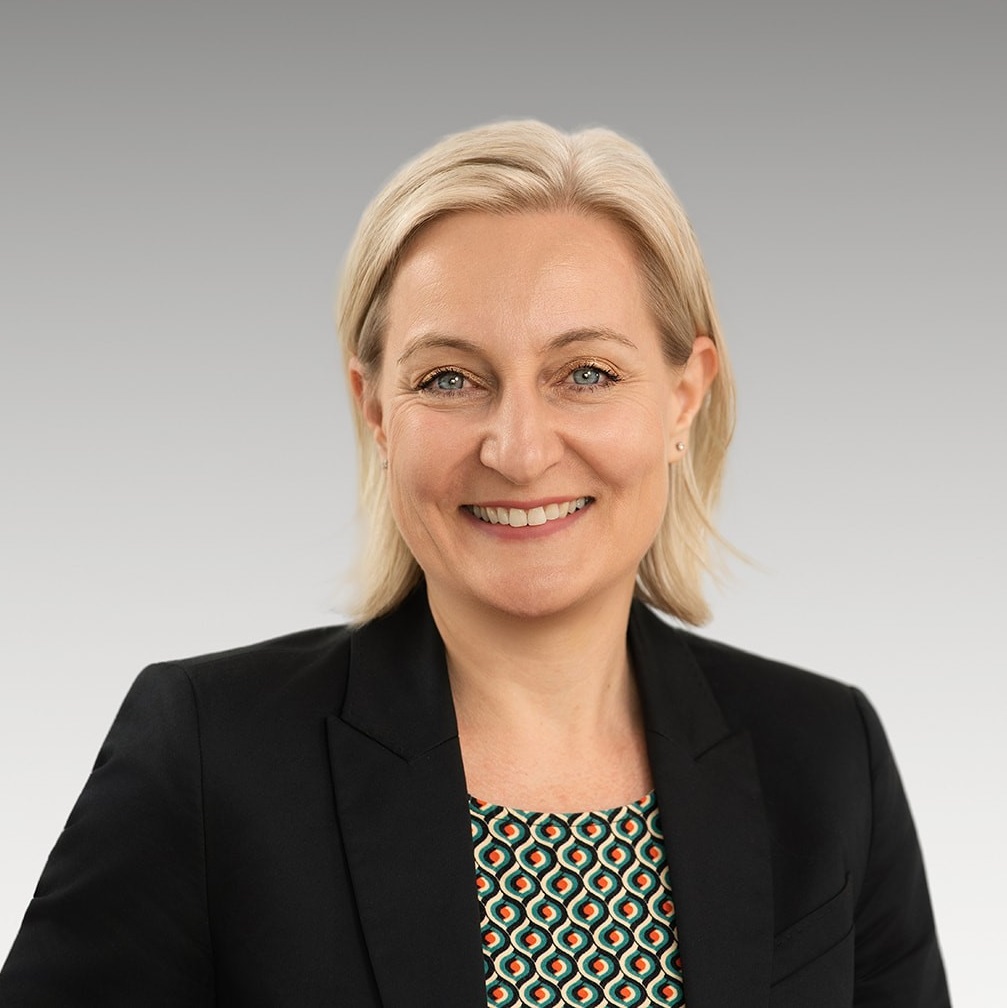
SANDRA NOLTE
DEPUTY CHAIR, Quality of Life (QoL) and Supportive Care Research Subcommittee
Cancer care is about more than treating the disease – it’s also about making sure people can live as well as possible during and after treatment.
ANZUP’s Quality of Life and Supportive Care Subcommittee plays an important role in keeping patients at the centre of cancer research. Working alongside other subcommittees, the group provides expert guidance on incorporating patient-reported outcome measures and supportive care considerations into clinical trials, helping ensure research not only improves survival but also enhances quality of life for people affected by Below the Belt cancers.
As Deputy Chair of ANZUP’s Quality of Life and Supportive Care Subcommittee, Sandra Nolte brings more than 20 years of experience in health-related quality of life (HRQoL) and patient-reported outcomes (PRO) research. In this interview, Sandra shares why listening to patients matters, how quality of life evidence can shape treatment decisions, the challenges facing cancer research, and her advice for the next generation of researchers.
What is the most important thing you wish every patient knew after a cancer diagnosis?
I wish every patient knew that their personal priorities are a vital part of the treatment decision. They deserve access to the available evidence on how a treatment will affect their daily functioning, their symptom burden, and their overall health-related quality of life (HRQoL).
Patients often assume that survival metrics are the only information that matters or exists, but patient-reported outcomes (PRO) data can reveal how previous patients actually experienced the therapy in their day-to-day lives. While clinical efficacy and medical judgment guide the core treatment options, equipping patients with real-world HRQoL evidence empowers them to have meaningful, shared decision-making conversations with their care team. True patient-centric care means honouring not just how long a treatment extends life, but what that life will look like during and after treatment.
What does successful cancer care look like beyond treating the cancer itself?
Having worked in HRQoL and PRO research for over two decades, I view successful cancer care as an approach that treats the person, not just the disease.
Beyond clinical efficacy, successful care systematically captures a patient’s lived experience, including actively monitoring symptom burden, physical functioning, and emotional distress in real time. It means using PRO data to trigger timely supportive care interventions before side effects compromise a patient’s daily life or lead to treatment interruption.
Ultimately, it comes down to shared decision-making, preserving patient autonomy, and ensuring both patients and their families feel heard and supported across the care continuum.
If you could solve one unanswered question in cancer research tomorrow, what would it be?
Within the HRQoL and PRO field, the one challenge I would solve tomorrow is establishing a standardised, globally accepted framework for PRO score interpretation thresholds (PROSIT), traditionally referred to as Minimal Important Difference (MID), to define what constitutes a meaningful change for patients.
Score interpretation threshold methodology has been a major focus of my research. As part of an international group of collaborators, we recently published a comprehensive review highlighting that the literature remains surprisingly fragmented (see https://pubmed.ncbi.nlm.nih.gov/41296240/). While our field has made extraordinary advancements in PRO measure (PROM) development, electronic PRO data capture, including computerised adaptive testing (CAT), and psychometrics over the last two decades, score interpretation thresholds remain inconsistent across disease types, disciplines, and even research groups.
Resolving this puzzle is complex because “meaningful change” naturally varies depending on baseline disease burden and individual patient context. However, achieving international consensus on standardised terminology and methodology is vital. Without clear standards, it is difficult for clinicians, payers, and regulatory bodies to determine whether a statistically significant shift in a PRO score translates into a real, noticeable improvement in a patient’s life.
I am encouraged by international collaborations like the SISAQOL initiative, which completed its work recently to establish standardised statistical guidelines for PRO endpoints in cancer trials. With continued joint efforts, I remain confident we can streamline the field, and our group of collaborators will also continue to contribute to that effort.
What inspired you to do what you do?
It’s a combination of things, as it is for many researchers, especially in a niche area such as PRO research.
I was introduced to this research area during my postgraduate studies when my supervisor invited me to run a validation study on a new PROM. The moment I started working on this topic and collected my own data, I realised how critical and underrepresented the patient’s voice was in research, and jumping into that opportunity turned out to be one of the best decisions of my career.
Knowing that my work in HRQoL and PRO methodology helps capture signals earlier and ensures treatment burdens are addressed gives me a great deal of purpose and motivation. Even if my research makes a difference for just a fraction of patients, it is what makes this work meaningful to me every single day.
What advice would you give to the next generation of cancer researchers?
My primary advice to the next generation of cancer researchers is to stay deeply curious and never be afraid to ask uncomfortable, critical questions. True methodological progress only happens when we are willing to challenge established norms and push for higher standards of rigour, whether that means scrutinising study designs, questioning assumptions, or actively engaging in meaningful peer review rather than just signing off on drafts. Those are at least the reasons why I am drawn to research.
I do worry that AI may diminish human curiosity, critical thinking, and the next generation’s ability to come up with original research ideas, organise their thoughts, and create scientific work, whether that is writing papers, producing research outputs, or delivering solid presentations. Research requires shortcuts to be avoided if we want to ensure true scientific integrity.