


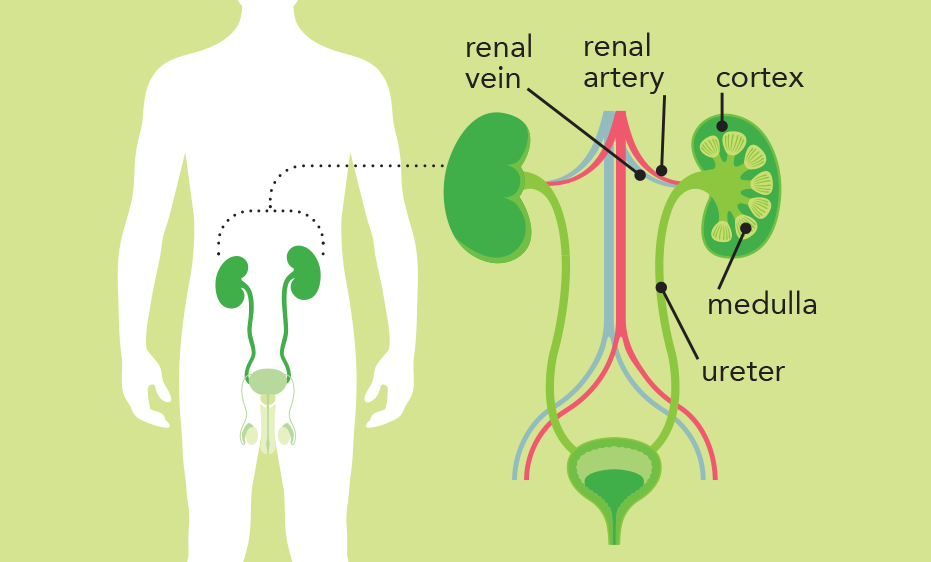
Kidney cancer develops when cells in the kidney become abnormal and start to grow and divide in an uncontrolled way. Over time, these abnormal cells can form a lump or mass which can develop into cancer.
Most kidney cancers (about 90%) are renal cell carcinomas (RCC), which start in the cells lining the tiny tubes in the kidney’s filtering units (called nephrons). The most common subtype of RCC is clear cell RCC, which accounts for ~80% of cases and is named because the tumour cells appear pale or clear when viewed under the microscope. Other subtypes of RCC include papillary RCC and chromophobe RCC.
Other, less common, types of kidney cancer, include urothelial carcinoma (transitional cell carcinoma) which starts in the lining of the kidney or ureter, and Wilms tumour which is the most common kidney cancer in children but rare overall.
Stage of kidney cancer
Localised (early) kidney cancer means the cancer is contained within the kidney and has not spread to other parts of the body.
Advanced or metastatic kidney cancer means the cancer has spread from the kidney to other parts of the body, such as nearby lymph nodes, lungs, liver, or bones.
The following sections will focus on renal cell carcinoma.
The exact cause of kidney cancer is not known; however, research shows that people with certain risk factors are more likely to develop kidney cancer. These risk factors include:
- Smoking
- Being overweight or obese
- High blood pressure
- Having advanced kidney disease
- Family history of kidney cancer
- Certain inherited (genetic) conditions e.g. von Hippel-Lindau disease, hereditary papillary RCC
Having one or more risk factors does not mean a person will develop kidney cancer. Many people with risk factors never develop cancer, and some people are diagnosed without any known risk factors. If you have concerns, talk to your doctor or specialist.
Many people with kidney cancer have no symptoms, especially in the early stages. Therefore, kidney cancer may be diagnosed during routine check-ups or tests for other health concerns.
If symptoms do occur, they may include:
- Blood in the urine (haematuria) or changes in the colour of urine to dark, rusty or brown
- Pain or a dull ache in the side or lower back that is not caused by an injury
- A lump in the abdomen (tummy) or side
- Unexplained weight loss
- Ongoing tiredness or fatigue
- Fever or night sweats not caused by other conditions such as a cold or flu
Not everyone with these symptoms will have kidney cancer but if you are experiencing any symptoms or have any concerns about your health, please see your doctor.
If kidney cancer is suspected, your GP may refer you to a specialist, such as a urologist or oncologist.
The following tests may be recommended to confirm the diagnosis and plan treatment:
General health tests
- Physical exam
- Blood and urine tests
Imaging
- Ultrasound
A handheld device (transducer) is moved over the abdomen (tummy). High-frequency sound waves create pictures of the kidneys and nearby organs. - CT (computed tomography) scan
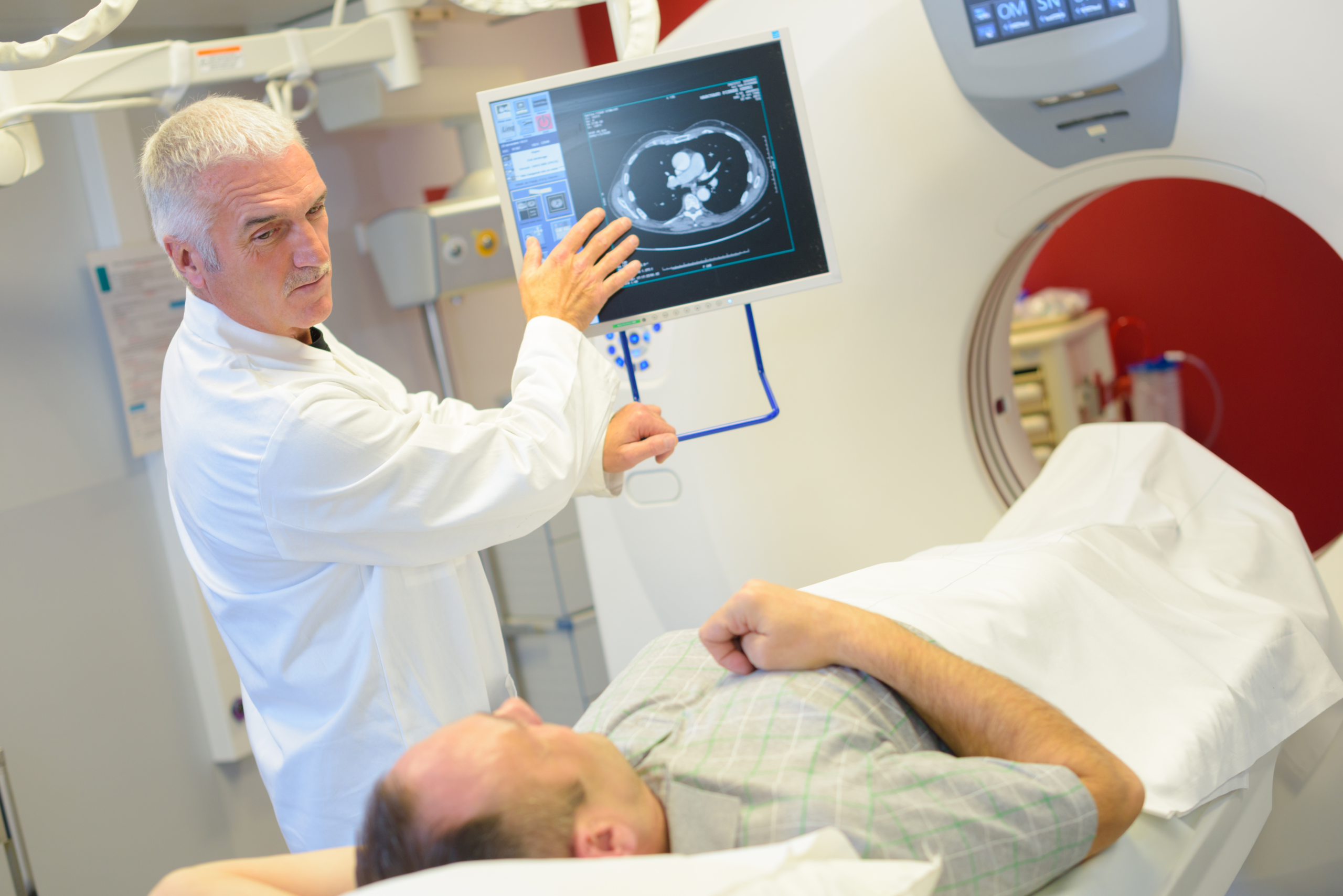
Uses X-rays and a computer to create detailed images of the kidneys, lymph nodes, and other parts of the body. A dye injected into a vein may be used to help show abnormal areas more clearly. - MRI (magnetic resonance imaging) scanUses a strong magnet and radio waves to produce detailed cross-sectional images of the kidneys and other organs. A contrast dye injected into a vein may be used to help highlight abnormal areas.
- PET (positron emission tomography) scan
A scan that uses a small amount of radioactive liquid to highlight areas of increased activity in the body, which may indicate cancer. PET scans are not routinely used for kidney cancer but may be recommended in some cases
Biopsy of the tumour
- Doctors may recommend a biopsy, which involves taking a small sample of tissue from the tumour and examining it under a microscope.
The results of these tests help doctors understand how far the kidney cancer has spread in the body (this is called the stage) and how abnormal the cancer cells look under the microscope and how likely they are to grow or spread (the grade). This information helps guide decisions about the most appropriate treatment.
Staging kidney cancer
Doctors use the TNM staging system to describe kidney cancer:
- T (Tumour) – size of the tumour and how far it has grown within or beyond the kidney (T1–T4)
- N (Nodes) – whether the cancer has spread to nearby lymph nodes
- N0: no spread to lymph nodes
- N1: spread to nearby lymph nodes
- M (Metastasis) – whether the cancer has spread to distant parts of the body
- M0: no spread
- M1: spread present
The TNM results are often put together to give an overall stage of kidney cancer, ranging from Stage 0 (earliest stage) to Stage IV (most advanced stage).
Grading kidney cancer
Grading is done by examining cancer cells under a microscope, usually from a biopsy or after surgery. The grade describes how abnormal the cancer cells look compared with normal kidney cells. It gives an idea of how quickly the cancer may grow.
- Low-grade cancers: the cancer cells look similar to normal kidney cells and are usually slow-growing
- High-grade cancers: the cancer cells look very abnormal and tend to grow more rapidly
In Australia, kidney cancer is graded using the International Society of Urological Pathology (ISUP) grading system or the Fuhrman grading system.
If kidney cancer is diagnosed, your doctor may discuss your case with other health professionals at a multidisciplinary team (MDT) meeting. This team may include urologists, medical oncologists, radiation oncologists, nurses, and allied health professionals such as physiotherapists. The MDT works together to recommend the most appropriate treatment options for you.
Treatment recommendations for kidney cancer depend on several factors, including:
- The type and stage of kidney cancer
- Whether you have symptoms
- Your overall health, and
- Your preferences
It is important to take time to discuss your treatment options, including possible benefits and side effects, with your doctor before deciding which treatment is right for you.
Treatment options may include one or more of the following:
Active surveillance
Closely monitoring the cancer with regular tests, without starting treatment straight away. This may be recommended for small, slow-growing tumours or when treatment risks are considered to outweigh benefits.
Surgery
Surgery is the most common treatment for localised kidney cancer. It may involve:
- Partial nephrectomy – removing part of the kidney that contains the tumour
- Radical nephrectomy – removing the entire kidney, surrounding fatty tissue, and sometimes nearby lymph nodes and the adrenal gland
After surgery, the remaining kidney usually does the work of both kidneys.
Ablation
Ablation may be recommended for some people with early kidney cancer when surgery is not the best option. It works by destroying the cancer tissue without removing it surgically. Types of ablation include cryotherapy, which uses extreme cold to destroy the tumour, or radiofrequency (thermal) ablation which uses high-energy radio waves to heat and destroy the tumour.
Immunotherapy
Immunotherapy uses the body’s immune system to recognise and attack cancer cells.
Checkpoint inhibitors are the main type of immunotherapy used in kidney cancer. These may be given on their own after surgery or used to treat advanced or metastatic kidney cancer, usually in combination with other immunotherapies or targeted therapies. They are given through a drip into a vein (intravenously).
How do checkpoint inhibitors work? T cells are a type of immune cell and are part of the body’s natural defence system. They help the body recognise and destroy abnormal cells. T cells have built-in “checkpoints” that act like brakes, helping prevent them from attacking healthy cells. Some cancer cells use these checkpoints to avoid being detected by the immune system. Checkpoint inhibitors are medicines that block these checkpoints, allowing T cells to better recognise and attack cancer cells.
Targeted therapy
Targeted therapy uses medicines that block specific proteins or signals that help cancer cells grow or form new blood vessels. These medicines may be used to treat advanced or metastatic kidney cancer, either on their own or in combination with other treatments, such as immunotherapy. Most targeted therapies for kidney cancer are taken by mouth as tablets or capsules.
Radiation therapy (radiotherapy)
Radiation therapy uses high-energy radiation to kill or damage cancer cells. For kidney cancer, it may be used if you are unable to have surgery, to help shrink the tumour or relieve symptoms.
Clinical trials
For general information about clinical trials, please click here: What is a clinical trial?
For information about ANZUP kidney cancer trials click here: Kidney cancer trials
All treatments can have side effects, which vary from person to person. Your doctor will discuss the possible benefits and risks with you.
Complementary and alternative therapies
- Complementary therapies are designed to be used alongside conventional medical treatment and may be used to help manage side effects of cancer or its treatment. They may include massage, psychological techniques or herbal medicines.
- Alternative therapies are used instead of conventional medical treatment. Most have not been scientifically tested for safety or effectiveness, and some therapies may interfere with cancer treatments or cause harm.
It is important to tell your cancer doctor about any complementary or alternative therapies you are using or considering before starting or during cancer treatment.