
Research Highlight – KEYPAD
KEYPAD
Background
Renal cell cancer is a disease that begins in the kidneys. Imagine your kidneys as two sophisticated cleaning systems in your body, constantly filtering your blood to remove waste and make urine. Renal cell cancer is what happens when some of the normal cells in your kidney start to grow uncontrollably, forming a lump or tumour. Kidney cancer affects over 5,000 people in Australia and New Zealand every year and while progress has been made over the last 30 years with the emergence of targeted treatments and immunotherapy for kidney cancer, only around 70% expected to survive 5 years after their diagnosis¹,².
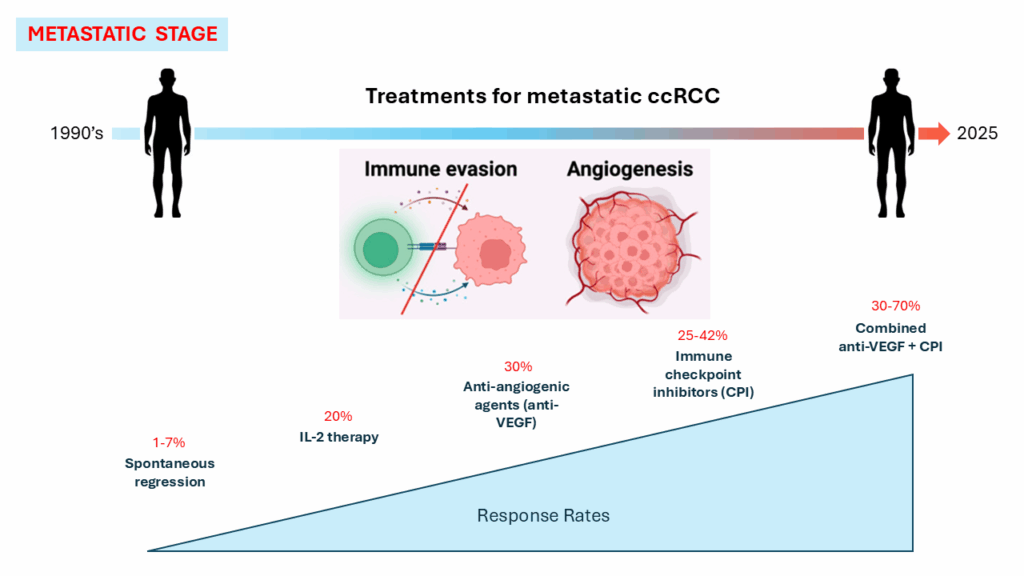
A 30-year perspective on response rate improvements in kidney cancer – presented by Dr Lewis Au. Thanks to world class research, new therapies for kidney cancer are now available (including targeted and immunotherapies) resulting in a 40% improvement in the mortality rate of kidney cancer over the last 30 years – but more research is needed to improve survival rates.
About the trial
Kidney cancer (or renal cell carcinoma) is 7th most diagnosed cancer in Australia. Approximately 80% of kidney cancers are classified as clear cell renal cell carcinomas and around 20% are the rarer subtype of non-clear cell carcinomas. While there are differences in the way these cancers behave, the five-year relative survival rate for Australians diagnosed with kidney cancer is 82.3%. Immunotherapies, that help the body fight the cancer, have been shown to be effective in about a quarter of patients with clear cell renal cell carcinoma after standard of care treatment has failed.
Denosumab, sold under the brand name Prolia, is an antibody used to control bone loss in people with osteoporosis but has also been used in advanced cancer to strengthen bones and reduce the risk of fractures for people with cancer. Denosumab is also believed to modify the behaviour of the immune system, an effect which has stimulated the interest in the use of this drug in combination with immunotherapies.
The ANZUP KEYPAD study tested whether denosumab can team up with immunotherapy (pembrolizumab) to shrink tumours and improve survival for people diagnosed with clear cell kidney cancer. The trial recently hit a major milestone, the completion of the trial and preparation of study results, bringing it one step closer to potentially changing treatment guidelines. Initial findings indicate that the combination of the two treatments is safe with early indications of response in some patients.
References:
- Cancer Data in Australia, Australian Institute of Health and Welfare (AIHW) 2024
- New Zealand Cancer Registry (NZCR), Health New Zealand-Te Whatu Ora