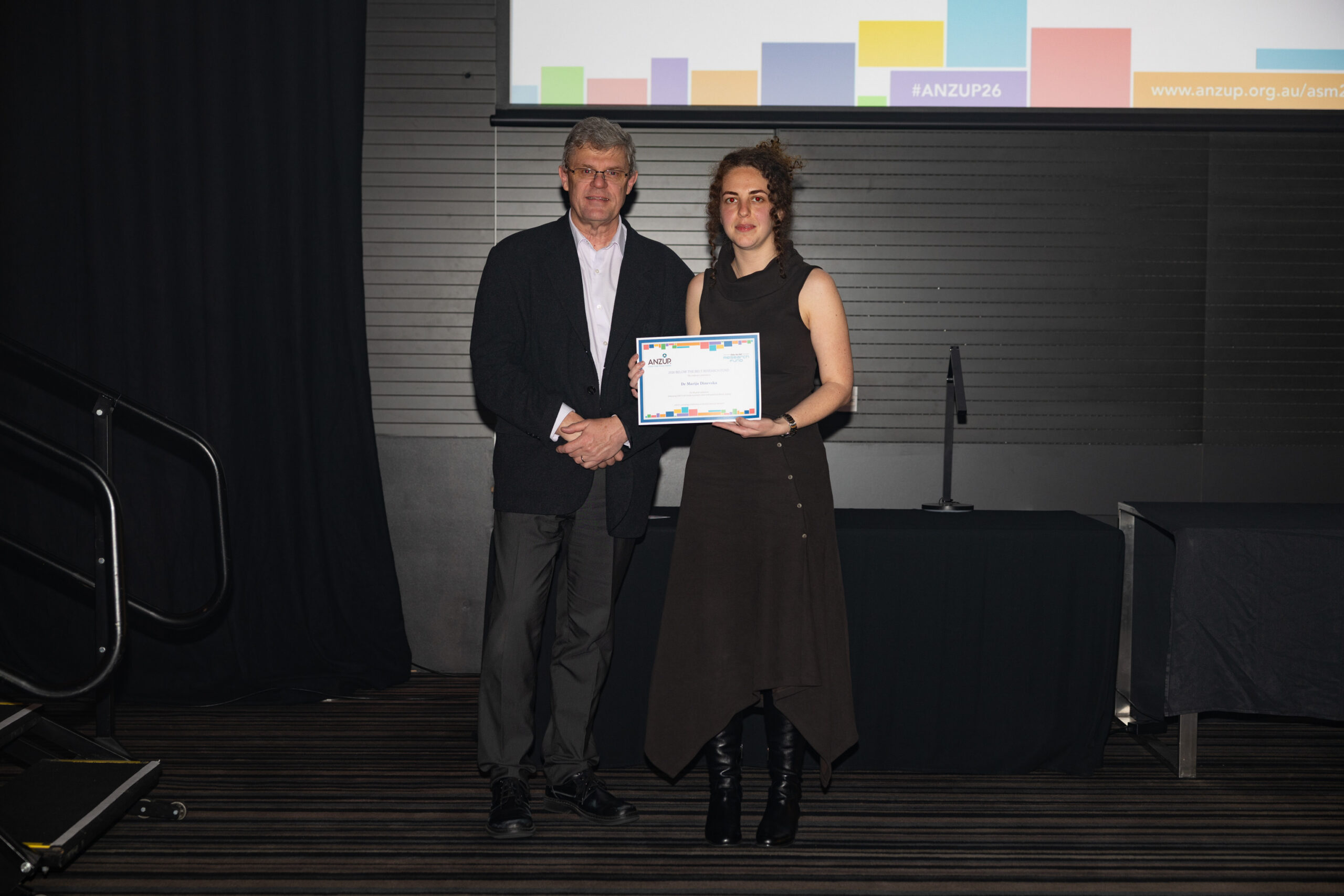
Below the Belt Award
Marija Dinevska — 2026
Enhancing CAR T-cell activity in prostate cancer with pulsed anti-fibrotic priming
Prostate cancer is the most diagnosed cancer in Australia and remains a leading cause of cancer-related death. While early-stage prostate cancer can be curable, once it spreads or stops responding to treatment, it becomes deadly. Patients at this stage have few choices left, highlighting an urgent need for more effective therapies for advanced disease.
A type of immunotherapy, ‘CAR T-cell therapy’, has revolutionised blood cancer treatment achieving up to 90% remission in certain types of leukaemia. It works by reprogramming a patient’s T-cells (type of immune cell) in a lab to attack cancer before returning them to the body. However, prostate cancer patients have not yet benefited from this therapy.
We hypothesise that CAR T-cell therapy hasn’t worked for prostate cancer because of the tumour’s physical structure, which is characterised by dense and stiff scar tissue. This physical barrier blocks CAR T-cells from getting inside the tumour to kill cancer cells.
Previously, using patient tumour samples, we found a way to bypass this barrier. A low-dose of chemotherapy (carboplatin) can destroy a few cancer cells, which triggers a strong immune response. This stimulates other cells inside the tumour to signal the CAR T-cells to rush in, shrinking some tumours to 1% of their original size. However, this remarkable result wasn’t seen across all patient tumours. We also saw an increase in the amount of scar tissue in tumours treated with chemotherapy and CAR T-cell treatment.
Our project aims to solve this problem by combining chemotherapy with a new drug designed to break down scar tissue. Destroying this physical wall will allow CAR T-cells to easily enter the tumour, creating a highly effective new treatment for advanced prostate cancer.
We will test this using donated human prostate tumours (from the world-class MURAL collection, founded by co-investigators Risbridger/Taylor) grown in laboratory mice. We will treat with chemotherapy, followed by the scar-disrupting drug to weaken the physical barrier and then deliver CAR T-cells designed to destroy the cancer.
We will also use highly specialised imaging technology called ‘intravital imaging’ to watch this treatment work in real-time. This will allow us to see exactly how the new drug breaks down the thick scar tissue and let us track the CAR T-cells as they enter the tumour, move around, survive, and ultimately destroy the cancer cells.
Combining human tumour models, live imaging, and a strategy to break the tumour’s shield perfectly positions us to make CAR T-cell therapy a reality for prostate cancer. Our overarching goal is to create a lifesaving option for patients who have exhausted all standard therapies.
Our team values consumer and community involvement from project inception. Because of this, expert consumer representative Dr. Tim Baker supports our proposal and has already provided vital input that has impacted our experiments for the better. As we generate data, we will continue working closely with Dr. Baker to ensure the project remains patient-driven. Furthermore, he will play a key role in disseminating our discoveries directly to the community.
A type of immunotherapy, ‘CAR T-cell therapy’, has revolutionised blood cancer treatment achieving up to 90% remission in certain types of leukaemia. It works by reprogramming a patient’s T-cells (type of immune cell) in a lab to attack cancer before returning them to the body. However, prostate cancer patients have not yet benefited from this therapy.
We hypothesise that CAR T-cell therapy hasn’t worked for prostate cancer because of the tumour’s physical structure, which is characterised by dense and stiff scar tissue. This physical barrier blocks CAR T-cells from getting inside the tumour to kill cancer cells.
Previously, using patient tumour samples, we found a way to bypass this barrier. A low-dose of chemotherapy (carboplatin) can destroy a few cancer cells, which triggers a strong immune response. This stimulates other cells inside the tumour to signal the CAR T-cells to rush in, shrinking some tumours to 1% of their original size. However, this remarkable result wasn’t seen across all patient tumours. We also saw an increase in the amount of scar tissue in tumours treated with chemotherapy and CAR T-cell treatment.
Our project aims to solve this problem by combining chemotherapy with a new drug designed to break down scar tissue. Destroying this physical wall will allow CAR T-cells to easily enter the tumour, creating a highly effective new treatment for advanced prostate cancer.
We will test this using donated human prostate tumours (from the world-class MURAL collection, founded by co-investigators Risbridger/Taylor) grown in laboratory mice. We will treat with chemotherapy, followed by the scar-disrupting drug to weaken the physical barrier and then deliver CAR T-cells designed to destroy the cancer.
We will also use highly specialised imaging technology called ‘intravital imaging’ to watch this treatment work in real-time. This will allow us to see exactly how the new drug breaks down the thick scar tissue and let us track the CAR T-cells as they enter the tumour, move around, survive, and ultimately destroy the cancer cells.
Combining human tumour models, live imaging, and a strategy to break the tumour’s shield perfectly positions us to make CAR T-cell therapy a reality for prostate cancer. Our overarching goal is to create a lifesaving option for patients who have exhausted all standard therapies.
Our team values consumer and community involvement from project inception. Because of this, expert consumer representative Dr. Tim Baker supports our proposal and has already provided vital input that has impacted our experiments for the better. As we generate data, we will continue working closely with Dr. Baker to ensure the project remains patient-driven. Furthermore, he will play a key role in disseminating our discoveries directly to the community.