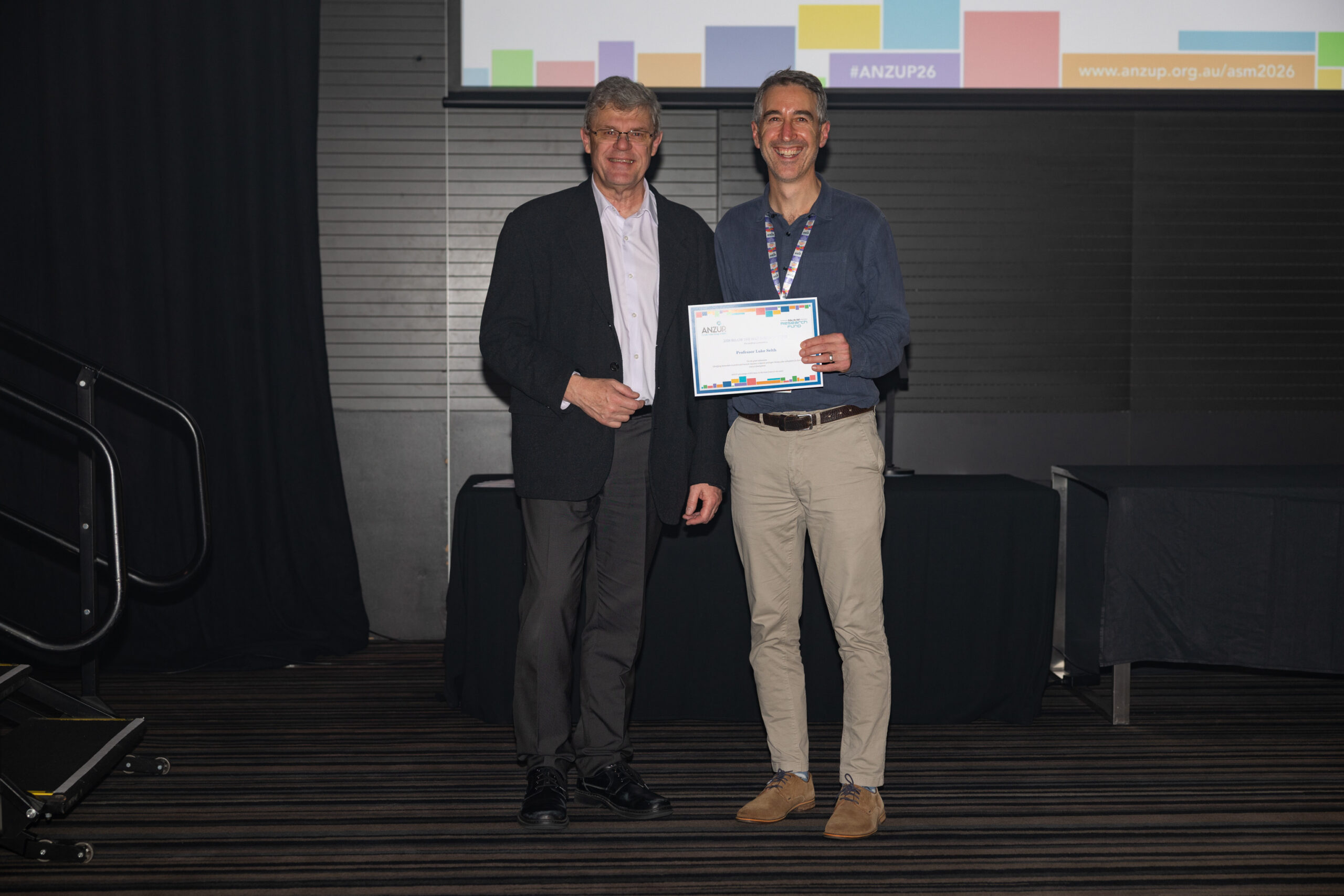
Below the Belt Award
Luke Selth — 2026
Identifying biomarkers to predict and monitor response to bipolar androgen therapy plus carboplatin for future clinical development
Background: Metastatic prostate cancer is treated with androgen deprivation therapy (ADT), which lowers testosterone levels. Although initially effective in most patients, prostate cancers eventually become resistant to ADT; these tumours are very aggressive and life threatening. ADT is also associated with severe side effects, such as fatigue, reduced libido and erectile dysfunction, loss of muscle/bone mass, and cardiovascular issues.
Interestingly, it has been known for decades that very high doses of testosterone can kill prostate cancer cells. This knowledge led to recent trials in which men with ADT-resistant prostate cancer were given monthly testosterone injections alongside ADT, an approach called bipolar androgen therapy (BAT). These trials found that BAT can shrink tumours in some patients. Importantly, BAT is safe and can reduce the side effects of ADT, resulting in improved quality of life.
Our team recently completed an ANZUP-supported clinical trial (https://clinicaltrials.gov/study/NCT03522064) where BAT was combined with a chemotherapy drug, carboplatin (BAT+carboplatin). Our idea was that this combined treatment would kill more cancer cells without compromising the quality of life benefits seen with BAT. The results of our trial were promising, with some patients achieving very long responses; however, other patients did not benefit.
Aims: This variation in response to BAT+carboplatin is similar to observations from other trials and directly informs our aims: to develop tools that can predict which patients are most likely to respond to this novel treatment, as well as tools that can monitor response over the course of treatment.
To achieve this, we will measure tumour DNA in the blood of patients from our clinical trial. This “circulating” DNA provides a personalised fingerprint for each tumour. With it, we will determine whether DNA markers can be used to predict and monitor response to BAT.
Benefits and Impact: We estimate that up to 40% of patients with ADT-resistant prostate cancer could benefit from BAT+carboplatin. Being able to identify those patients prior to treatment would provide both life-prolonging and quality of life benefits for this large group of patients; conversely, men unlikely to respond (or who have started therapy but stop responding) could be given an alternative therapy.
Consumer Involvement: We are working with Mr Tuan Hoang, who is being treated for prostate cancer and enrolled in another ANZUP trial of BAT (WOMBAT; ANZUP 2201), giving him first-hand experience of testosterone treatment. Mr Hoang is also a member of the ANZUP Consumer Advisory Panel. He is very enthusiastic about our goal of improving the usefulness of BAT by identifying markers for patient treatment selection. He read the application, discussed it with us, and suggested how we could clarify the goals and significance. Mr Hoang will be involved throughout this study, and we will also recruit additional patient representatives to provide further perspectives across different states. Our consumers will provide ongoing feedback on the progress and direction of the project through quarterly Teams meetings. We will also meet for individual face-to-face meetings and lab tours.
Interestingly, it has been known for decades that very high doses of testosterone can kill prostate cancer cells. This knowledge led to recent trials in which men with ADT-resistant prostate cancer were given monthly testosterone injections alongside ADT, an approach called bipolar androgen therapy (BAT). These trials found that BAT can shrink tumours in some patients. Importantly, BAT is safe and can reduce the side effects of ADT, resulting in improved quality of life.
Our team recently completed an ANZUP-supported clinical trial (https://clinicaltrials.gov/study/NCT03522064) where BAT was combined with a chemotherapy drug, carboplatin (BAT+carboplatin). Our idea was that this combined treatment would kill more cancer cells without compromising the quality of life benefits seen with BAT. The results of our trial were promising, with some patients achieving very long responses; however, other patients did not benefit.
Aims: This variation in response to BAT+carboplatin is similar to observations from other trials and directly informs our aims: to develop tools that can predict which patients are most likely to respond to this novel treatment, as well as tools that can monitor response over the course of treatment.
To achieve this, we will measure tumour DNA in the blood of patients from our clinical trial. This “circulating” DNA provides a personalised fingerprint for each tumour. With it, we will determine whether DNA markers can be used to predict and monitor response to BAT.
Benefits and Impact: We estimate that up to 40% of patients with ADT-resistant prostate cancer could benefit from BAT+carboplatin. Being able to identify those patients prior to treatment would provide both life-prolonging and quality of life benefits for this large group of patients; conversely, men unlikely to respond (or who have started therapy but stop responding) could be given an alternative therapy.
Consumer Involvement: We are working with Mr Tuan Hoang, who is being treated for prostate cancer and enrolled in another ANZUP trial of BAT (WOMBAT; ANZUP 2201), giving him first-hand experience of testosterone treatment. Mr Hoang is also a member of the ANZUP Consumer Advisory Panel. He is very enthusiastic about our goal of improving the usefulness of BAT by identifying markers for patient treatment selection. He read the application, discussed it with us, and suggested how we could clarify the goals and significance. Mr Hoang will be involved throughout this study, and we will also recruit additional patient representatives to provide further perspectives across different states. Our consumers will provide ongoing feedback on the progress and direction of the project through quarterly Teams meetings. We will also meet for individual face-to-face meetings and lab tours.