
ANZUP at ASCO 2025 – TheraP
TheraP
Background
Prostate cancer remains the most commonly diagnosed cancer in Australia and New Zealand with over 30,000 people expected to be diagnosed every year. Thanks to world class research, prostate cancer can be treated effectively for the majority of the people affected¹,². Nevertheless, over 4,000 people every year will die due to an advanced or hard-to-treat form of prostate cancer and many more people will have life-long treatment related side-effects including morbidity associated with long-term hormonal suppression, sexual dysfunction and mental health issues³.
Metastatic castration-resistant prostate cancer (mCRPC) is a type of advanced prostate cancer that has spread to other parts of the body and no longer responds to standard hormone therapy, which is meant to lower testosterone. Even though testosterone levels are low, the cancer keeps growing. While it can’t be cured, there are several treatment options that can help slow the cancer down and manage symptoms.
About the trial
Lutetium-177 PSMA radionuclide therapy (Lu-PSMA) is a new treatment for advanced prostate cancer. Lu-PSMA is a radioactive molecule that specifically attaches to cells with high amounts of PSMA on the surface of the cells. This allows the radioactivity to be delivered mainly to the prostate cancer cells wherever they have spread, while sparing most normal tissues. Previous small studies of Lu-PSMA showed promising activity in patients with advanced prostate cancer.
This randomised study has compared Lu-PSMA, with a type of chemotherapy called cabazitaxel, which is the standard treatment for advanced prostate cancer when other treatments have stopped working. Half the participants received Lu-PSMA and half received cabazitaxel. This trial enrolled 200 participants in Australia.
TheraP is a partnership between ANZUP Cancer Trials Group and the Prostate Cancer Foundation of Australia (PCFA) with support from the Australian Nuclear Science and Technology Organisation (ANSTO), Endocyte, It’s a Bloke Thing, Movember and CAN4CANCER.
Key findings
ANZUP was able to report interim results of the TheraP clinical trial at the American Society of Clinical Oncology (ASCO) Annual Scientific Virtual Meeting on Friday 29 May 2020.
A favourable response, defined by reduction of PSA by 50% or more, occurred in 66% of people assigned to receive Lu-PSMA compared to 37% with cabazitaxel. Results of the trial also demonstrated the treatment had less severe side effects than chemotherapy. Patient follow-up is ongoing with initial results suggesting the new treatment may delay progression of prostate cancer.
Oral presentation at ASCO 2025
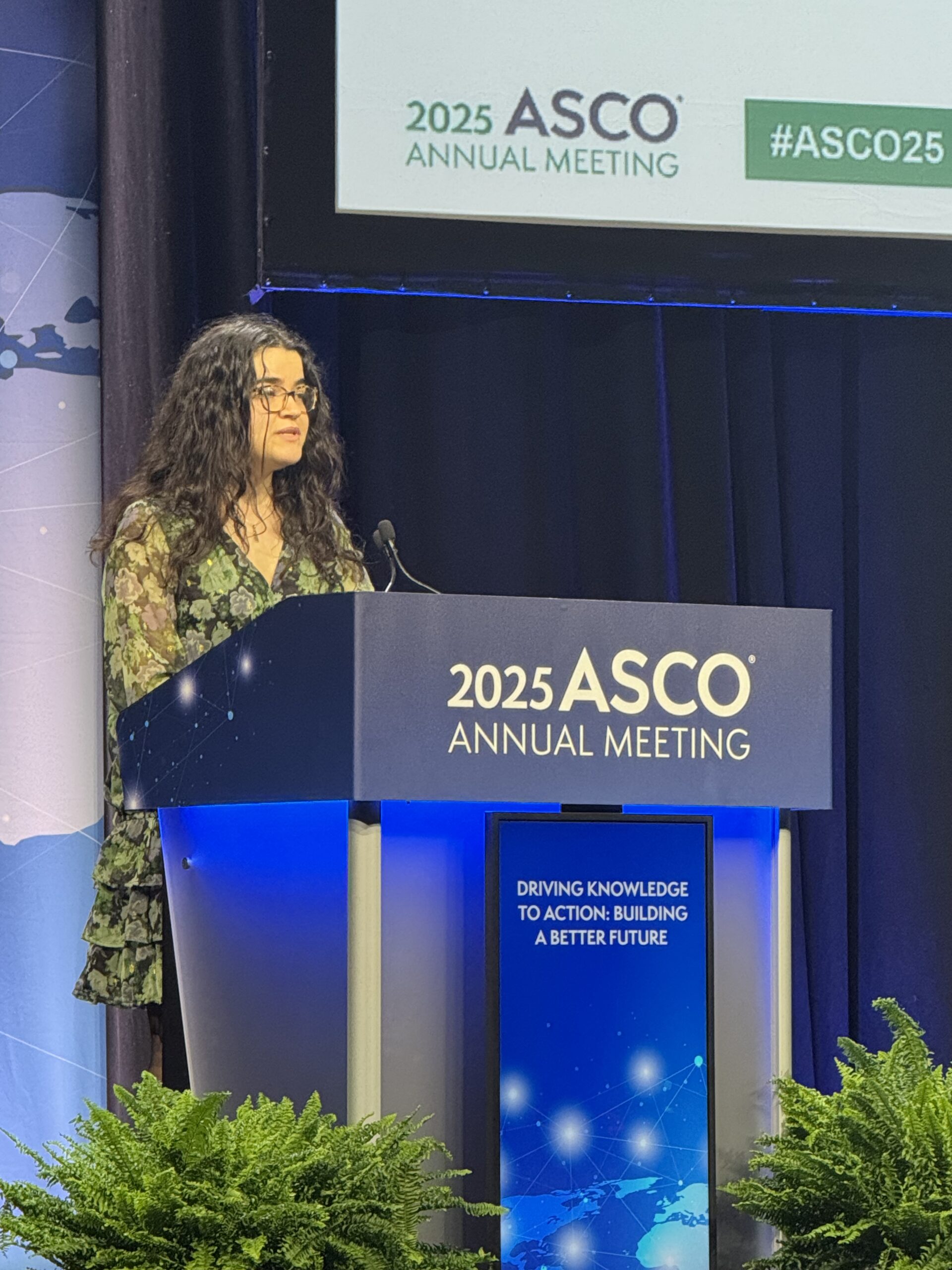
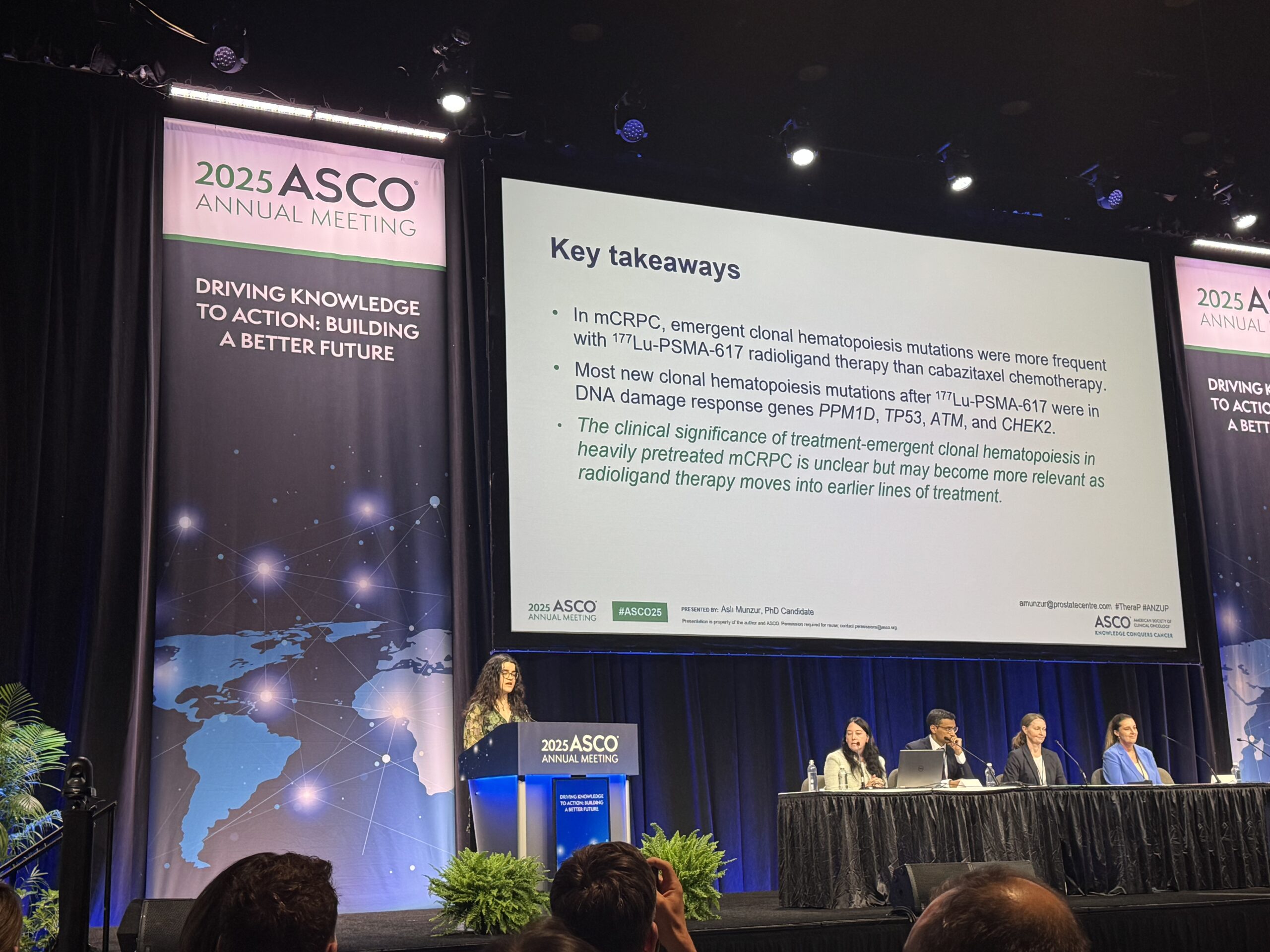


Clonal hematopoiesis (CH) in participants with metastatic castration-resistant prostate cancer (mCRPC) receiving 177Lu-PSMA-617 or cabazitaxel: an exploratory post-hoc analysis of a randomized phase II trial
Oral presentation by Dr Asli Munzur. Clonal haematopoiesis occurs when there is abnormal expansion of clonal hematopoietic (blood forming) stem cells that occurs with age or via cellular mutation and is a condition that can lead to blood cancers, cardiovascular disease and increased mortality. Dr Asli Munzur presented fundings from a sub-study of the TheraP trial which showed that treatment with the radioligand therapy LuPSMA was associated with a higher incidence of clonal hematopoiesis mutations compared to cabazitaxel chemotherapy. While more research is needed, the study highlighted the importance of understanding the risks of hematological conditions (eg blood cancers) when considering LuPSMA treatment.
References:
- Cancer Data in Australia, Australian Institute of Health and Welfare (AIHW) 2024
- New Zealand Cancer Registry (NZCR), Health New Zealand-Te Whatu Ora
- National Cancer Control Indicators; relative survival for prostate cancer by stage, 2011