


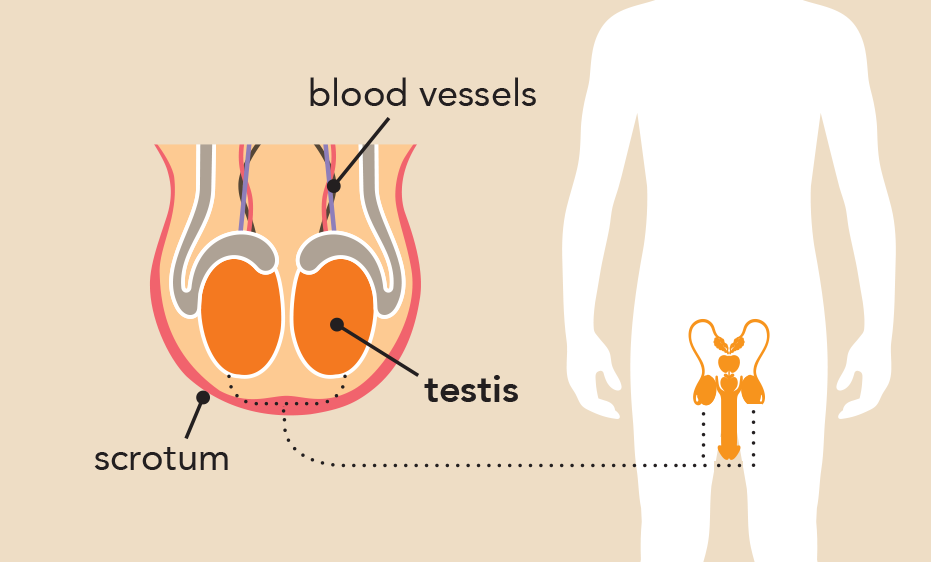
Testicular cancer starts when abnormal cells in a testicle begin to grow and divide in an uncontrolled way. Over time, these abnormal cells can form a lump or mass which can develop into cancer. In most cases, testicular cancer affects one testicle, but in some people, it can affect both testicles or spread to other parts of the body. Anyone with a testicle can develop testicular cancer.
Most testicular cancers (more than 95%) are germ cell tumours. These cancers start in the cells that make sperm. There are two main types:
- Seminomas
Seminomas usually grow more slowly than non seminomas. They are most often diagnosed in people aged 25–45 years, but they can also occur at older ages. - Non seminomas
Non seminomas tend to grow and spread more quickly than seminomas and are more commonly diagnosed in teenagers and young adults. There are four main types of non seminoma testicular cancer: teratoma, embryonal carcinoma, yolk sac tumour, and choriocarcinoma. Most non-seminomas contain a mixture of more than one cell type.
Many testicular cancers are mixed germ cell tumours, meaning they contain a mix of seminoma and non seminoma cells, or different non seminoma types. These cancers are usually treated like non seminomas because they tend to behave in a similar way.
Other less common testicular tumours include stromal tumours, which start in the supportive and hormone producing tissues of the testicle. The two main types are Sertoli cell tumours and Leydig cell tumours, and they are usually benign (not cancerous).
The following sections focus on germ cell tumours only, referred to as testicular cancer.
The exact causes of testicular cancer are not known. However, research shows that people with certain risk factors have a higher chance of developing testicular cancer.
These risk factors include:
- Germ cell neoplasia in situ (GCNIS) – a precancerous condition in which some cells in the testicle are abnormal and may develop into testicular cancer over time. GCNIS usually causes no symptoms and is often found incidentally when tissue is examined under a microscope for another reason.
- A previous diagnosis of testicular cancer
- Undescended testicle(s) at birth (cryptorchidism), which occurs when one or both testicles do not move down into the scrotum before birth
- Family history of testicular cancer, particularly if a father, brother or son has had testicular cancer
- Human immunodeficiency virus (HIV) infection or acquired immunodeficiency syndrome (AIDS)
- Hypospadias, a condition present at birth where the opening of the penis is on the underside rather than the tip
- Fertility problems
Having one or more risk factors does not mean you will develop testicular cancer. Many people with risk factors never develop cancer, and some people develop testicular cancer without any known risk factors.
If you have concerns about your risk factors or health, talk to your doctor or specialist.
Testicular cancer may not cause any noticeable symptoms, especially in the early stages. It is sometimes found during tests or examinations done for another reason.
When symptoms do occur, the most common include:
- A lump or swelling in a testicle, which is often painless
- A change in the size, shape, or feel of a testicle
Less common symptoms may include:
- Feeling heaviness in the scrotum
- Feeling a difference between the testicles
- Pain or ache or discomfort in the testicle or scrotum (the pouch of skin behind the penis where the testicles sit)
- Back pain
- Changes to the breast tissue (e.g. swelling or tenderness)
- Pain in the lower abdomen (tummy)
Not everyone with these symptoms has testicular cancer, but if you have any of these symptoms, or if you are concerned about your health, it is important to see your doctor.
Checking your testicles
Getting to know what is normal for you can help you notice changes early. When checking, look and feel for:
- New lumps or swelling
- Changes in size, shape, or firmness
- Any persistent pain or discomfort
Most changes are not caused by cancer, but it is important to see your doctor if have any new or unusual changes.
If testicular cancer is suspected, you will usually see your general practitioner (GP) first. Your GP may arrange some initial tests and, if needed, refer you to a specialist for further investigations.
The following tests may be recommended to confirm the diagnosis and plan treatment:
Physical examination
- Your doctor will examine the testicles, scrotum, and groin to check for lumps, swelling, or other changes.
Blood tests
- Tumour marker tests
Your doctor may recommend a blood test to measure substances called tumour markers in your blood. Some testicular cancers can produce tumour markers known as AFP (alpha-fetoprotein), HCG (human chorionic gonadotropin), and LDH (lactic dehydrogenase). These blood test results can help doctors diagnose testicular cancer, monitor how well treatment is working, and check whether the cancer has returned. However, it is important to note that not all testicular cancers cause raised levels of these markers.
Imaging
- Ultrasound
This is the main imaging test used to assess changes in the testicles. A handheld device (called a transducer) is moved over the scrotum. High frequency sound waves create pictures of the testicle and nearby structures, showing the size of any abnormal area and helping to tell the difference between fluid-filled cysts and solid tumours.
Surgery and pathology
- Surgery (orchidectomy or orchiectomy)
If testicular cancer is suspected, surgery to remove the affected testicle is usually recommended. This procedure is called an orchidectomy (or orchiectomy). It is done both to confirm the diagnosis and to treat the cancer.In many cases, a testicular prosthesis (a silicone implant to replace the removed testicle) may be an option to help maintain the appearance of the scrotum. Whether this is suitable depends on individual circumstances and can be discussed with your surgeon. - Pathology examination
After surgery, the removed tissue is examined under a microscope by a specialist doctor called a pathologist. This confirms whether cancer is present and identifies the type of testicular cancer.
Further tests
Other imaging tests may be recommended to show how far the cancer has grown or whether it has spread to other parts of the body. These may include:
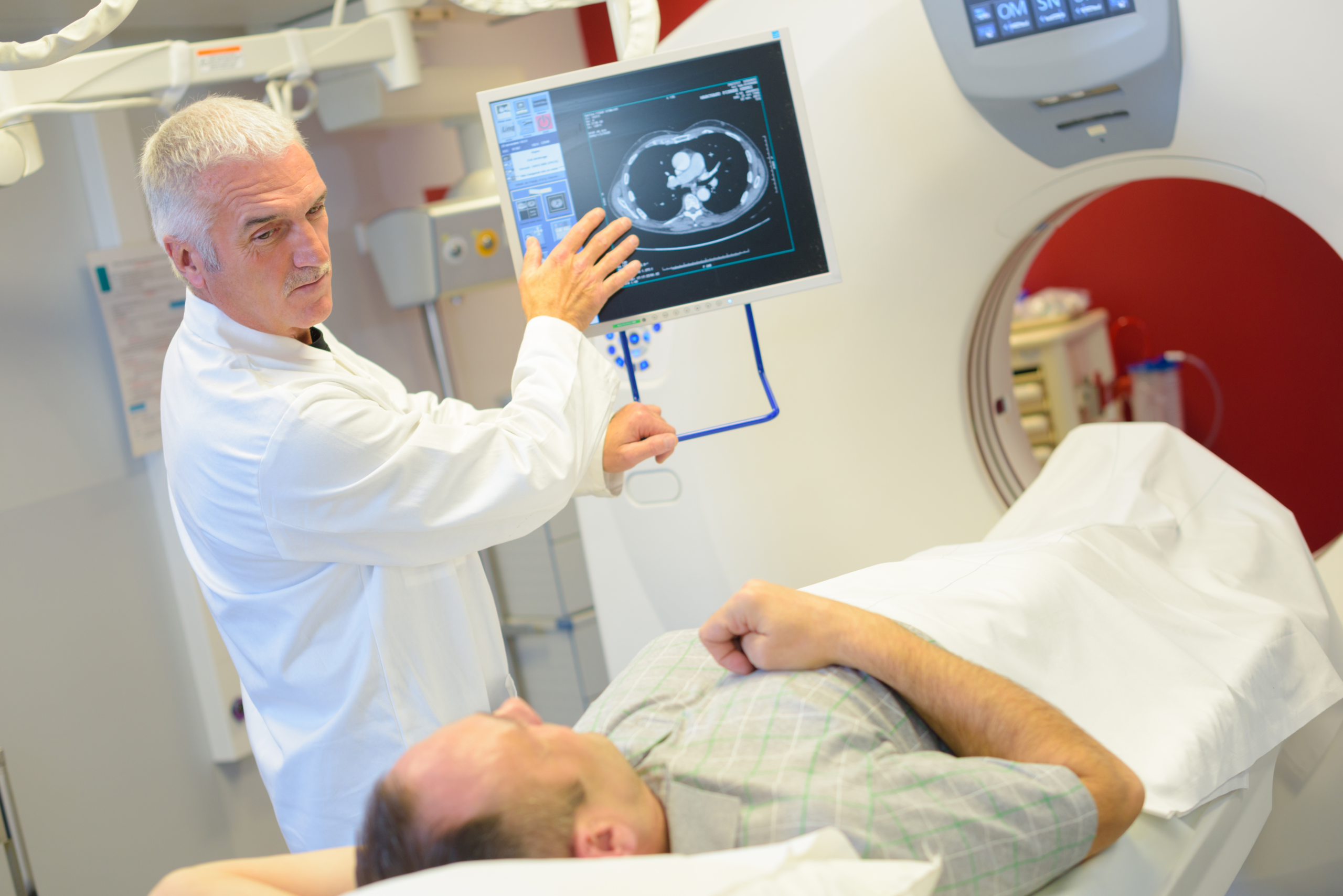
- CT (computed tomography) scan
Uses X-rays and a computer to create detailed images of the testicles, lymph nodes, and other parts of the body. CT scans are often used after diagnosis to check whether the cancer has spread to lymph nodes or other parts of the body. - MRI (magnetic resonance imaging) scan
Uses a strong magnet and radio waves to produce detailed cross-sectional images of the testicles and other organs. A contrast dye injected into a vein may be used to help highlight abnormal areas.
These tests help doctors to:
- Confirm whether testicular cancer is present
- Identify the type of cancer
- Find out whether the cancer has spread to other parts of the body, such as the lymph nodes or other organs (this is called the stage)
- Plan the most appropriate treatment for you
Doctors may use the TNM staging system to describe the cancer stage:
- T (Tumour) – describes whether the cancer is contained within the testicle or has spread to nearby blood vessels or tissues (Tis or T1–T4)
- N (Nodes) – whether the cancer has spread to nearby lymph nodes in the abdomen (tummy)
- N0: no spread to lymph nodes
- N1-N3: spread to nearby lymph nodes
- M (Metastasis) – whether the cancer has spread to distant parts of the body, such as lymph nodes, other organs or bones
- M0: no distant spread
- M1: distant spread present
Based on the TNM results and the levels of tumour markers in the blood, testicular cancer is then grouped into overall stages from Stage 0 (earliest stage) to Stage III (most advanced stage).
If testicular cancer is diagnosed, your doctor may discuss your treatment options with other health professionals (e.g. urologists, medical oncologists, radiation oncologists, nurses, physiotherapists) at a multidisciplinary team (MDT) meeting. The MDT works together to recommend the most appropriate treatment options for you.
Treatment recommendations depend on several factors, including:
- The type and stage of testicular cancer
- Whether the cancer has spread
- Your overall health, and
- Your preferences
It’s important to take time to talk with your doctor about your treatment options, including the possible benefits and side effects, before deciding what’s right for you. If having children in the future is important to you, consider discussing fertility preservation with your doctor before treatment begins.
Treatment may include one or more of the following:
Surgery
Active surveillance
After surgery, some people may enter active surveillance, particularly if the cancer has not spread and the risk of recurrence is low. Active surveillance involves regular check-ups, blood tests, and scans to monitor for any signs that the cancer has returned.
Chemotherapy
Chemotherapy uses drugs to damage or kill rapidly dividing cells, such as cancer cells. Chemotherapy for testicular cancer is usually given through a drip into a vein (intravenously). It may be given as a single drug or as a combination of drugs, and can be used in different situations, including:
- After surgery (adjuvant chemotherapy)
Chemotherapy may be recommended after an orchidectomy for people who are considered to be at higher risk of recurrence. - Advanced or metastatic disease
Chemotherapy may also be used to treat testicular cancer that has spread to other parts of the body.
Radiation therapy (radiotherapy)
Radiation therapy uses high-energy radiation to damage and kill cancer cells. Radiotherapy to the lymph nodes may be used after an orchidectomy (removal of the testicle) to lower the risk of testicular cancer coming back, or to treat people who are not suitable for chemotherapy.
Clinical trials
For general information about clinical trials, please click here: What is a clinical trial?
For information about ANZUP testicular cancer trials click here: Testicular cancer trials
All treatments can have side effects, which vary from person to person. Your doctor will discuss the possible benefits and risks with you.
Complementary and alternative therapies
- Complementary therapies are used alongside conventional medical treatment and may help manage symptoms or side effects of cancer or its treatment. These may include massage, psychological or relaxation techniques, and some herbal or natural therapies.
- Alternative therapies are used instead of conventional medical treatment. Most have not been scientifically tested for safety or effectiveness, and some therapies may interfere with cancer treatments or cause harm.
It is important to tell your cancer doctor about any complementary or alternative therapies you are using or considering before starting or during cancer treatment.